
Artikel: How I Discovered the Handwoven Merino Wool Shawls Behind likemary

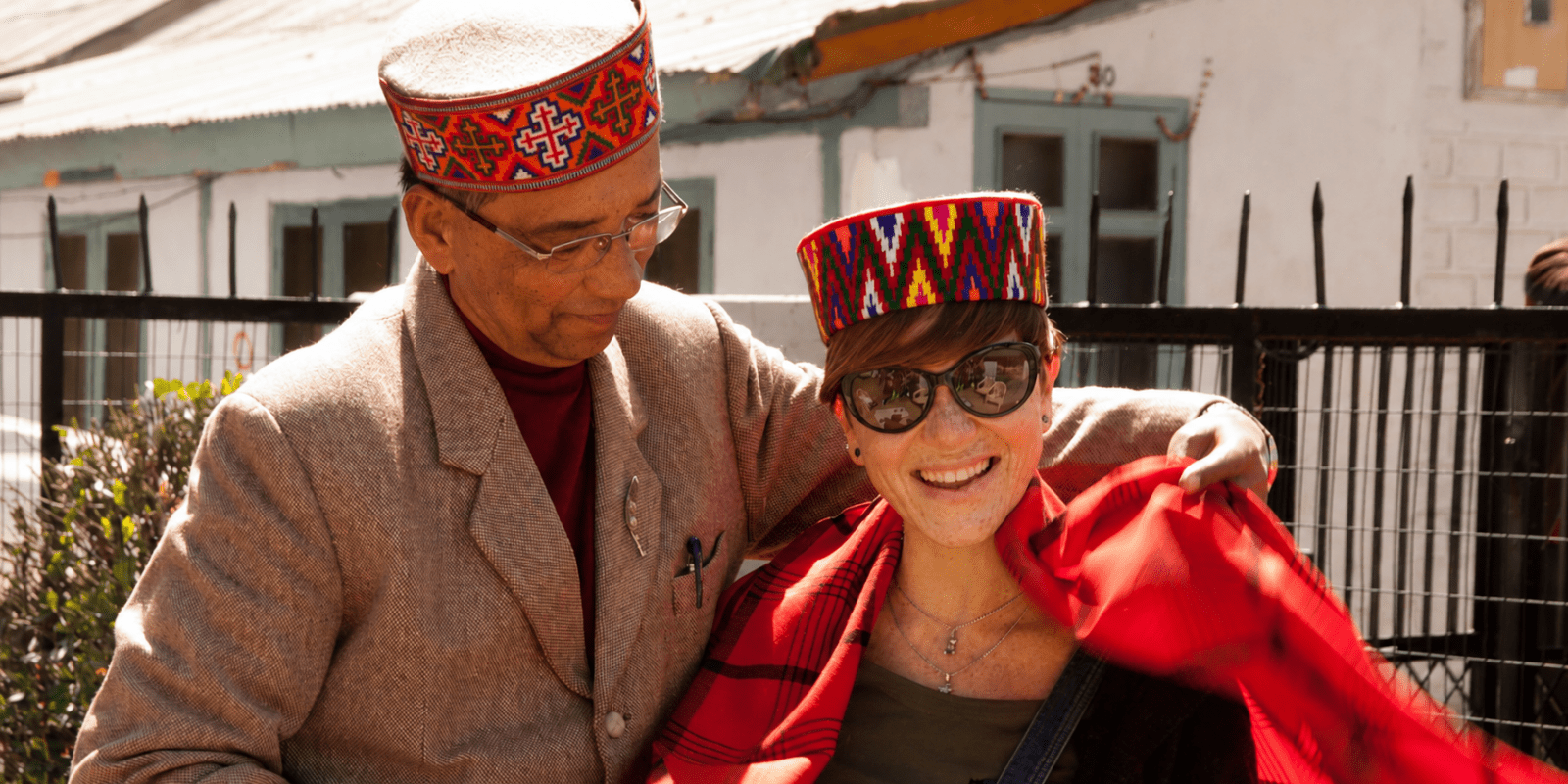
How I Discovered the Handwoven Merino Wool Shawls Behind likemary
My discovery of the weaving cooperative in the Kullu Valley that still handweaves likemary’s merino wool shawls began with a search for a shawl of my own.
It was 2007 and I was finally back in India, four years after my first six-month trip. I had another six-month visa and planned to travel north from Delhi through Rajasthan and then on to Kashmir, Leh, Ladakh and Himachal Pradesh.
I wasn’t searching for a product to sell or thinking about starting a business. I did want to find a multi-use 100% wool shawl that I could carry with me and use daily throughout my travels.
Why a shawl became my most useful travel companion
Scarves and shawls are an everyday part of life across India. Depending on the region, the climate and the clothing being worn, they provide protection from the sun, wind, dust and cold, as well as adding colour and character to every outfit.
I didn’t adopt traditional Indian clothing while travelling, but I always wore some sort of scarf, whether hiking or by the beach. Having a lightweight piece of fabric when travelling is very versatile and useful. Carrying or wearing a shawl or scarf, in some way, helped me feel prepared.
For example, when I didn’t have a hat, I could use my scarf to cover my head from the sun. When the wind picked up or the temperature fell, I wrapped my shawl around my neck and shoulders.
Travelling between states also meant experiencing frequent changes in temperature. Not only from one destination to another, but sometimes between day and night. In the desert, for example, the daytime heat can be intense, yet it becomes surprisingly chilly once the sun goes down.
In the north of India, a shawl soon became my best friend. It was much lighter and easier to carry than a bulky jacket, both in my backpack and on shorter day trips. It became my blanket on overnight trains and an extra layer on air-conditioned buses and car journeys.

I also loved the way it looked. Draped around my shoulders or wrapped as a scarf, it somehow brightened up, even what soon became, worn hiking clothes.
Searching for a shawl that really was made from wool
I soon learned that not all shawls are made equal.
Markets were filled with shawls labelled as “Tibetan” or “100% wool”, and many travellers owned one, including me. They looked warm and cosy, but I began to question whether they were really wool and whether they would provide the warmth I needed.
On my quest to learn how to tell real wool from synthetic, I was taught a simple way of checking the fibre: carefully remove and burn a loose thread. Synthetic fibres tend to melt and smell like burning plastic, while wool smells more like burning hair. This is not a substitute for proper fibre testing, but it did help me understand how easily acrylic and other synthetic fibres could be mistaken for wool.


As I travelled through Kashmir and Ladakh, I continued searching for an affordable shawl made entirely from wool. Kashmir had no shortage of exceptionally beautiful wool shawls, but the ones I encountered were beyond my traveller’s budget.
It wasn’t until towards the end of my trip, when I reached Manali in Himachal Pradesh, that I finally found what I had been looking for.
Discovering the weaving cooperative in the Kullu Valley
Near Manali, I discovered the cooperative in the Kullu Valley that likemary still works with today.
The shawls checked every box. They were handwoven from 100% wool, made through a cooperative and large enough to wrap around my shoulders or use as a light blanket. At the same time, they could be folded lengthways and worn comfortably as a scarf.

I didn’t have to compromise between warmth, practicality and appearance. One shawl could do all the things I had previously needed several different accessories for.
I fell in love with them.
At that point, I still wasn’t thinking about collections, product pages or building a brand. I had simply found a shawl that I loved and that suited the way I travelled and lived.
From India to everyday life in London
When my travels eventually brought me to London, the shawl remained my constant companion.
On cold mornings, I would grab it as I shuffled sleepily into the kitchen to make my first coffee of the day. Starting the morning wrapped in it made the beginning of the day feel warmer and more comforting.
For nights out in Soho, it became a scarf, an evening wrap or an improvised head covering when it rained and I had forgotten an umbrella. It was smart enough to wear out, but warm and familiar enough to use at home.
Most importantly, I kept reaching for it.
That repeated use showed me the real value of the shawl. It wasn’t only something lush that I had brought home from India. It had become one of the most useful pieces I owned.
People regularly complimented me on it and asked where it came from. Eventually, I began to wonder whether other women might appreciate these shawls as much as I did.

Returning to India for the first 50 shawls
In October 2009, I bought another ticket to India, arranged my visa and returned to Himachal Pradesh in search of the weaving cooperative.
I came back to London with just 50 shawls.
I sold them at Portobello Market on cold winter Saturdays. Standing outside in the London weather was not quite the same as discovering the shawls in the foothills of the Himalayas, but the response gave me the confidence to continue.

Customers were drawn to the same qualities that had attracted me: the colours, the generous size, the natural warmth and the fact that each shawl felt individual.
That first collection encouraged me to return to the Kullu Valley—often called the “Valley of the Gods”—and I began collaborating with the weavers on more contemporary colour combinations and designs.

The shawl that helped to start likemary
That first shawl gave me warmth on trains, comfort on cold mornings, an easy layer for evenings out and something chic to wear with the simplest outfit.
It demonstrated the idea that still sits at the heart of likemary: clothing and accessories can absolutely be beautiful while also being genuinely useful. A single well-made piece can work in different ways, travel easily and become something you keep reaching for year after year.
Today, likemary’s shawls are still handwoven by the same cooperative in the Kullu Valley using 100% merino wool. Although the collection has grown and the designs have evolved, I choose them according to the same principles that made me fall in love with my original shawl: 100% natural merino warmth, handwoven on a traditional warp and weft handloom, oversized generous coverage, gorgeous colours, distinctive patterns and wear everyday and almost everywhere versatility.
What began as my search for one genuine wool shawl became the starting point for the likemary collections that I am most proud of.